Jonathan Edwards’ Seventh Resolution

“7. Resolved, never to do anything, which I should be afraid to do, if it were the last hour of my life.”

-Jonathan Edwards


At my school, Sequitur Classical Tutorial, we just finished reading Everyman, a mediaeval morality play. The main plot of the story follows: God summons Death to bring to him Everyman, the main character of the story. Upon meeting Death and realizing his intentions, Everyman begs Death to let him have more time, for he is not ready to give a reckoning of his life, but to no avail. Yet finally, Everyman persuades Death to let him try and bring others along with him on his journey to God. Everyman first goes to Fellowship, who promises to give his life for Everyman, yet recants when it comes down to it. Likewise, Cousin and Kin, and Goods (possesions) react similarly: they promise great things, yet change their minds ultimately. In the end, only Good Deeds and Knowledge accompany Everyman on his journey to give a reckoning.

The moral of the story is two-fold. First, it seems to be rather obvious that the underlying message of the play is that we ought to live a life that would be ready to give a reckoning to God at any moment, as Jonathan Edwards Seventh Resolution states. The second moral can be expressed in this stanza from the play’s script: “O all thing faileth, save God alone; Beauty, Strength, and Discretion; for when Death bloweth his blast, they all run from me fast.” (Everyman) God is the only constant thing we have, and he should be regarded above all else, for all else dwindles away in the end.


Lucas


Protestants vs. Catholics

When Christians of opposing theologies condemn those who disagree with them on particular issues as heretics, I get irked. For instance, the Strange Fire Conference condemning the Charismatics, and many Protestants condemning Roman Catholics troubles me.  The latter will be the focus of this post, due to a recent post on challies.com, condemning Pope Francis as a false teacher of a false church: “[Pope Francis] is the head of a false church that is opposed to the true gospel of salvation by grace alone through faith alone in Christ alone… Rome remains fully committed to a gospel that cannot and will not save a single soul”

I am not Roman Catholic. I have said this before, and I will say it again. Honestly, I disagree with a large majority of Catholic theologies. Yet, I acknowledge Rome to be a valid – yet incorrect – denomination of Christianity. A faithful Catholic is just as much Christian as a faithful Protestant or a faithful Eastern Orthodox Christian, and nothing really makes me more upset than to see a Christian condemning other Christians.

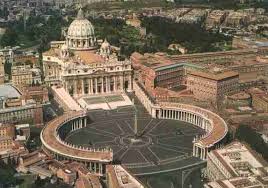
Vatican

The Vatican

The main reason that Protestants today condemn Catholics as heretics is their doctrine of justification by faith + works, a doctrine which I absolutely disagree with. I believe that humans are totally incapable if meriting salvation in any form or fashion other than faith. Faith alone saves. (Rom. 3:28).

Yet I do not believe in a God who sentences those who have faults in their theology to eternal damnation: I tend to be Calvinist, but I do not believe that God condemns faithful Arminians; I tend to be Continuationist, but I do not believe God condemns faithful Cessationist; I believe in Sola Fide (by faith alone), yet I do not believe that God condemns those faithful Catholics who believe in faith + works, etc.. As N.T.Wright said,  “We are not justified by faith by believing in justification by faith. We are justified by faith by believing in the gospel itself — in other words that Jesus is Lord and that God raised him from the dead.” Catholics affirm this, along with the Trinity, Christ’s full deity, full humanity, death, resurrection, and his atonement for our sins. These must be affirmed to be an orthodox Christian. Outside of these essentials, one ought not to condemn another for heresy. One ought not to assume that they are right therefore have the power and ability to condemn those who are wrong. That’s God’s place, and God’s alone.

I do want to emphasize a great many differences between Protestants and Rome. Catholics hold to many things, such as Purgatory, Justification by Faith and Works, Papal Infallibility, Inclusivism, Sacramental Grace, praying to saints, prayers for dead, and other things that Protestants disagree with vehemently. My point in writing this is not to say “Oh, Catholics, Protestants, what’s the difference?”  for such is not the case. There are a vast many reasons that we Protestants do not belong in Rome’s fold. My point in writing this is to say, “Guys, call down. We all worship the same God, only in different ways.” So please, recognize that we have differences – because we do – but Protestants, love your Catholic brothers, and Catholics, love your Protestant brothers.

Christians all worship the same God. Do not be so quick to judge, for the judgement shall only fall back on you. (Matt. 7:1-5)

Lucas

Protestants Crossing Themselves

Oh, how I wish Rome didn’t have a monopoly on making the Sign of the Holy Cross. How I wish Christians didn’t view making the Cross before/after praying, when partaking of the Eucharist, at Baptism, etc.  as “something Roman Catholics do.” Part of me exclaims “Oh, to heck with what the majority of Christianity thinks! I’m Crossing myself!” Yet my other, more respectful self says, “Lucas, respect the your peers and elder’s beliefs. It isn’t a hill to die on.”

And of course it isn’t. It’s a sign, and merely that. But it represents more than the Cross. Chiefly, it is a reminder that I’ve been baptized. That MATTERS. No matter what one think Baptism “does” – whether it only represents cleansing, or whether it actually does the cleansing – the fact that one has been been baptized matters greatly, and should be remembered. On one certain occasion Martin Luther, the Great Reformer, was being tempted tirelessly by Satan, so he supposedly threw his ink-well across the room at the wall and shouted “I have been baptized! I am a Christian!” To remember one’s baptism, be it credo or paedo, is to remember that they have been marked as one of God’s Fold, they have been set apart.

To Cross oneself is not only to remember baptism, but to remember what has been done and what that implies: Christ died for the whole world, and that should by no means be forgotten at any time. That should have great implications on one’s life. This fact ought to provide fuel for the fight against sin, so to remind oneself of that regularly is healthy.

So, one side of me exclaims emphatically that every Christian should Cross themselves.

But my other, more cautious side says that there is surely a reason that a large portion of Christians don’t make the Sign. Unfortunately, doing something repeatedly, no matter what that is,  typically gets mundane, ritualistic, thoughtless, and taken for granted. Obviously, the same goes for making a hand sign, no matter how great or small its meaning is. This is why many churches, mine included, don’t partake of the Eucharist on a weekly basis. While I feel that the Holy Communion ought to be partaken of weekly, that is for another blog post.

Anyway, unless the vast majority of Protestants change their view of the Sign of the Holy Cross, I would caution those bold protestants out there, saying “Hey! I want to do that too!” to abstain from making the Sign in public (if you want to in private, by all means, go ahead), because when someone sees that sign, they automatically think, “that person is Roman Catholic.” Not that there is anything wrong with Roman Catholics, but there are reasons that we Protestants aren’t Catholic.


In Christ,

Lucas.

Racism and Christianity

Galatians 3:28: “There is neither Jew nor Gentile, neither slave nor free, nor is there male and female, for you are all one in Christ Jesus.”


As someone vehemently opposed to racism, I believe that one who actively pursues and acts upon racism can not claim be a Christian. There is no reconciling the Gospel of Christ with any form of racism (i.e. White-supremacy, Neo-nazism, KKKism, Black Panther Partyism, etc.). We see in Numbers 12 Moses being opposed by Aaron and Miriam because he was married to a Cushite woman, that is, an Ethiopian woman. God struck Miriam with leprosy and her hand turned white. If God does not have a problem with and even defends race and race-mixing, neither should we, as Christians, have a problem with such. To do so is to completely contradict the fact that all men are made in God’s image, and that Christ died for all men, Black, White, Asian, Indian, etc.


Fighting words? Maybe. But this is something I think is worth fighting for. Yet over all, these are just some thoughts. Feel free to correct me, contradict me, agree with me, etc.

Praise God From Whom All Blessings Flow.

When we examine ourselves throughout the week/day/month/year, and note how often we fail and sin, it ought to amaze us to think that an all perfect and good God, that is, the One and Only Triune God, can condescend to our humanity and sinful nature to endure Hell on the Cross in all of the world’s place, chosen and un-chosen. Left to ourselves we spit in his face, disown him, and hate him; but because of his infinite mercy and love, some have been chosen into his fold and are thus guaranteed salvation, and no thought, word, or deed can thwart that endless love he has for his children and cause him to turn his back on us, his children. We are his forever, and we will be glorified in the end due to the working of his power:
Praise God from whom all blessings flow; Praise him all creatures here below.