A Few Thoughts on the Death Penalty

“You can’t reconcile being pro-life on abortion and pro-death on the death penalty.”
-N.T. Wright

When I first read this quote I was excited. Really excited. For two reasons: (1) I am against the death penalty – for the most part – and (2) I love N.T.Wright.

Personally, I am not a fan of the government having the power to kill the citizens of their countries. Regardless, there are certain circumstances when the government ought to be able to exact the death penalty: first, the death penalty should be exacted if and only if  the crime committed is deserving of death (you can get into some tricky ground there), and second,  if and only if absolute evidence can be produced by the prosecution (i.e. clear video or DNA evidence, etc.).

Anyways, back to the quote. I think, as conservatives who value life above all other rights, we should consider the apparent discontinuity between our vehement opposition of abortion – and rightfully so – and our upholding of capitol punishment. There is an obvious retort to this: unborn babies are innocent, and those sentenced to death are not! Of course. I agree with this. Yet if we uphold life as the highest value, we should strive to preserve it at all costs. No, this does not warrant pacifism; but it does call us to avoid killing people if at all possible. There are obviously ways to do so regarding crime: life in prison, with or without parole, maybe even solitary-confinement, etc. Maybe even instilling cruel and unusual punishment would deter soon-to-be-criminals from committing crimes worthy of such a sentence… Okay, just kidding… Don’t do that.

Death is terrible. Death is a monster. It truly is, and inflicting it upon another ought to be avoided at all costs. Of course, self-defense and war are times where killing is warranted, but over all, it should be shunned. Abortion should be outlawed immediately along with the death penalty, if it doesn’t meet the requirements listed above.


Just a few scribblings. Feel free to comment your thoughts.


In Christ,

Lucas.
Evening Prayer by Martin Luther

“In the name of the Father and of the Son and of the Holy Spirit. Amen.

I thank you, my heavenly Father, through Jesus Christ, Your dear Son, that You have graciously kept me this day; and I pray that You would forgive me all my sins where I have done wrong, and graciously keep me this night. For into Your hands, I commend myself, my body and soul, and all things. Let Your holy angel be with me, that the evil foe may have no power over me. Amen.”

-Martin Luther

Rule of Faith – Irenaeus

“. . . this faith: in one God, the Father Almighty, who made the heaven and the earth and the seas and all the things that are in them; and in one Christ Jesus, the Son of God, who was made flesh for our salvation; and in the Holy Spirit, who made known through the prophets the plan of salvation, and the coming, and the birth from a virgin, and the passion, and the resurrection from the dead, and the bodily ascension into heaven of the beloved Christ Jesus, our Lord, and his future appearing from heaven in the glory of the Father to sum up all things and to raise anew all flesh of the whole human race . . .”

-St. Irenaeus

How to Make Christian Art

“By the words ‘Christian art’ I do not mean Church art…I mean Christian art in the sense of art which bears within it the
character of Christianity…It is the art of redeemed humanity…Everything belongs to it, the sacred as well as the
profane. It is at home wherever the ingenuity and the joy of man extend. Symphony or ballet, film or novel, landscape
or still-life, puppet-show libretto or opera, it can just as well appear in any of these as in the stained-glass windows and
statues of churches…If you want to make a Christian work, then be Christian, and simply try to make a beautiful work,
into which your heart will pass; do not try to ‘make Christian’. (Art and Scholasticism by Jacques Maritain)

Jonathan Edwards’ Seventh Resolution

“7. Resolved, never to do anything, which I should be afraid to do, if it were the last hour of my life.”

-Jonathan Edwards


At my school, Sequitur Classical Tutorial, we just finished reading Everyman, a mediaeval morality play. The main plot of the story follows: God summons Death to bring to him Everyman, the main character of the story. Upon meeting Death and realizing his intentions, Everyman begs Death to let him have more time, for he is not ready to give a reckoning of his life, but to no avail. Yet finally, Everyman persuades Death to let him try and bring others along with him on his journey to God. Everyman first goes to Fellowship, who promises to give his life for Everyman, yet recants when it comes down to it. Likewise, Cousin and Kin, and Goods (possesions) react similarly: they promise great things, yet change their minds ultimately. In the end, only Good Deeds and Knowledge accompany Everyman on his journey to give a reckoning.

The moral of the story is two-fold. First, it seems to be rather obvious that the underlying message of the play is that we ought to live a life that would be ready to give a reckoning to God at any moment, as Jonathan Edwards Seventh Resolution states. The second moral can be expressed in this stanza from the play’s script: “O all thing faileth, save God alone; Beauty, Strength, and Discretion; for when Death bloweth his blast, they all run from me fast.” (Everyman) God is the only constant thing we have, and he should be regarded above all else, for all else dwindles away in the end.


Lucas


Protestants vs. Catholics

When Christians of opposing theologies condemn those who disagree with them on particular issues as heretics, I get irked. For instance, the Strange Fire Conference condemning the Charismatics, and many Protestants condemning Roman Catholics troubles me.  The latter will be the focus of this post, due to a recent post on challies.com, condemning Pope Francis as a false teacher of a false church: “[Pope Francis] is the head of a false church that is opposed to the true gospel of salvation by grace alone through faith alone in Christ alone… Rome remains fully committed to a gospel that cannot and will not save a single soul”

I am not Roman Catholic. I have said this before, and I will say it again. Honestly, I disagree with a large majority of Catholic theologies. Yet, I acknowledge Rome to be a valid – yet incorrect – denomination of Christianity. A faithful Catholic is just as much Christian as a faithful Protestant or a faithful Eastern Orthodox Christian, and nothing really makes me more upset than to see a Christian condemning other Christians.

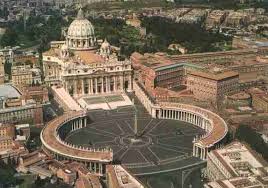
Vatican

The Vatican

The main reason that Protestants today condemn Catholics as heretics is their doctrine of justification by faith + works, a doctrine which I absolutely disagree with. I believe that humans are totally incapable if meriting salvation in any form or fashion other than faith. Faith alone saves. (Rom. 3:28).

Yet I do not believe in a God who sentences those who have faults in their theology to eternal damnation: I tend to be Calvinist, but I do not believe that God condemns faithful Arminians; I tend to be Continuationist, but I do not believe God condemns faithful Cessationist; I believe in Sola Fide (by faith alone), yet I do not believe that God condemns those faithful Catholics who believe in faith + works, etc.. As N.T.Wright said,  “We are not justified by faith by believing in justification by faith. We are justified by faith by believing in the gospel itself — in other words that Jesus is Lord and that God raised him from the dead.” Catholics affirm this, along with the Trinity, Christ’s full deity, full humanity, death, resurrection, and his atonement for our sins. These must be affirmed to be an orthodox Christian. Outside of these essentials, one ought not to condemn another for heresy. One ought not to assume that they are right therefore have the power and ability to condemn those who are wrong. That’s God’s place, and God’s alone.

I do want to emphasize a great many differences between Protestants and Rome. Catholics hold to many things, such as Purgatory, Justification by Faith and Works, Papal Infallibility, Inclusivism, Sacramental Grace, praying to saints, prayers for dead, and other things that Protestants disagree with vehemently. My point in writing this is not to say “Oh, Catholics, Protestants, what’s the difference?”  for such is not the case. There are a vast many reasons that we Protestants do not belong in Rome’s fold. My point in writing this is to say, “Guys, call down. We all worship the same God, only in different ways.” So please, recognize that we have differences – because we do – but Protestants, love your Catholic brothers, and Catholics, love your Protestant brothers.

Christians all worship the same God. Do not be so quick to judge, for the judgement shall only fall back on you. (Matt. 7:1-5)

Lucas