When Christians of opposing theologies condemn those who disagree with them on particular issues as heretics, I get irked. For instance, the Strange Fire Conference condemning the Charismatics, and many Protestants condemning Roman Catholics troubles me. The latter will be the focus of this post, due to a recent post on challies.com, condemning Pope Francis as a false teacher of a false church: “[Pope Francis] is the head of a false church that is opposed to the true gospel of salvation by grace alone through faith alone in Christ alone… Rome remains fully committed to a gospel that cannot and will not save a single soul”
I am not Roman Catholic. I have said this before, and I will say it again. Honestly, I disagree with a large majority of Catholic theologies. Yet, I acknowledge Rome to be a valid – yet incorrect – denomination of Christianity. A faithful Catholic is just as much Christian as a faithful Protestant or a faithful Eastern Orthodox Christian, and nothing really makes me more upset than to see a Christian condemning other Christians.

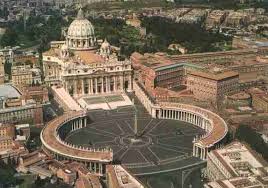
The Vatican
The main reason that Protestants today condemn Catholics as heretics is their doctrine of justification by faith + works, a doctrine which I absolutely disagree with. I believe that humans are totally incapable if meriting salvation in any form or fashion other than faith. Faith alone saves. (Rom. 3:28).
Yet I do not believe in a God who sentences those who have faults in their theology to eternal damnation: I tend to be Calvinist, but I do not believe that God condemns faithful Arminians; I tend to be Continuationist, but I do not believe God condemns faithful Cessationist; I believe in Sola Fide (by faith alone), yet I do not believe that God condemns those faithful Catholics who believe in faith + works, etc.. As N.T.Wright said, “We are not justified by faith by believing in justification by faith. We are justified by faith by believing in the gospel itself — in other words that Jesus is Lord and that God raised him from the dead.” Catholics affirm this, along with the Trinity, Christ’s full deity, full humanity, death, resurrection, and his atonement for our sins. These must be affirmed to be an orthodox Christian. Outside of these essentials, one ought not to condemn another for heresy. One ought not to assume that they are right therefore have the power and ability to condemn those who are wrong. That’s God’s place, and God’s alone.
I do want to emphasize a great many differences between Protestants and Rome. Catholics hold to many things, such as Purgatory, Justification by Faith and Works, Papal Infallibility, Inclusivism, Sacramental Grace, praying to saints, prayers for dead, and other things that Protestants disagree with vehemently. My point in writing this is not to say “Oh, Catholics, Protestants, what’s the difference?” for such is not the case. There are a vast many reasons that we Protestants do not belong in Rome’s fold. My point in writing this is to say, “Guys, call down. We all worship the same God, only in different ways.” So please, recognize that we have differences – because we do – but Protestants, love your Catholic brothers, and Catholics, love your Protestant brothers.
Christians all worship the same God. Do not be so quick to judge, for the judgement shall only fall back on you. (Matt. 7:1-5)
Lucas
 Lucas Kelly